The Alkaloid #30: The Jobs Behind the Jar
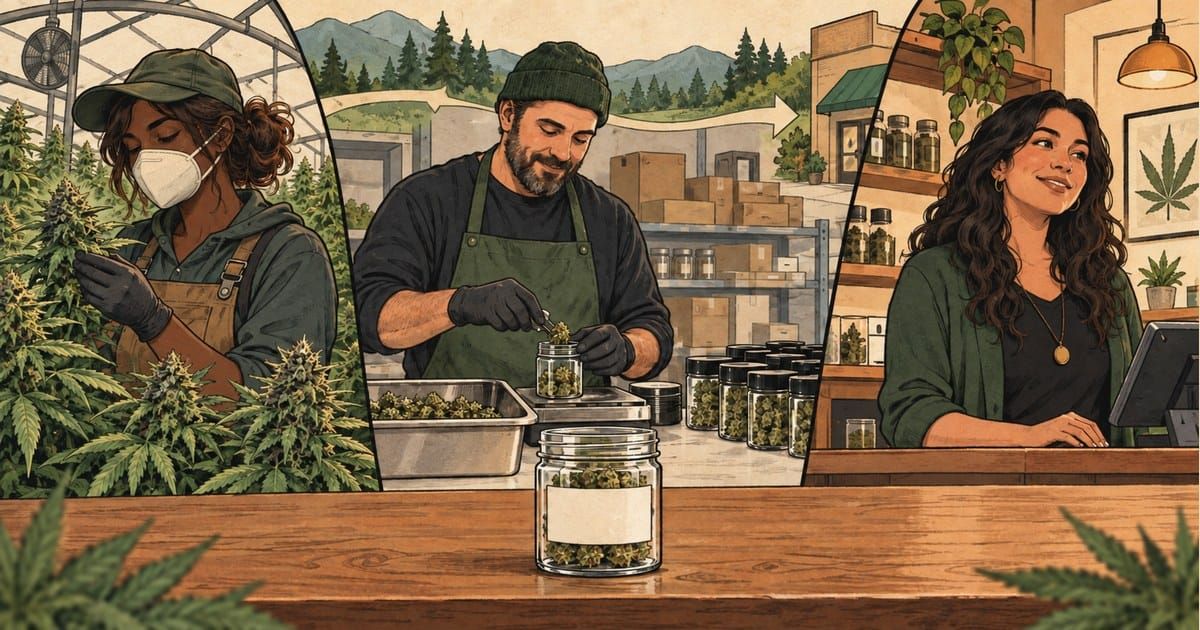
Before a cannabis jar reaches the counter, someone grows, harvests and cures it. Massachusetts' repeal debate is also about those paychecks, the businesses behind them and the limits of promises about what comes next.

Science, culture and capital — one dose at a time
The Dose
You don't have to use cannabis to care about the people who grow it, package it and sell it.
They deserve the same things anyone wants from a job: decent pay, a safe place to work and some confidence that the work will still be there next year. That should matter in Massachusetts' debate over ending recreational sales.
The Alkaloid's position is to keep the legal market and make it work better for the people earning a living in it. We can support workers organizing for better wages. We can demand safer production facilities and hold employers accountable when they fall short. None of that requires treating the industry as either a miracle or a mistake.
Consider the cultivation workers at New England Treatment Access in Franklin. In August, their union reported a new contract covering 18 workers, with wage increases, a $700 ratification bonus and improvements to benefits and overtime pay.[3]
Those are tangible gains. Someone doing the growing, harvesting or curing negotiated better terms for their work. That's worth paying attention to, even if you've never set foot in a dispensary.
Question 8 would end the state's regulated recreational sales system while preserving medical cannabis. Existing adult-use businesses could apply for expedited medical licenses.[2] But permission to apply for a different license offers workers little reassurance about whether their employer could keep the same staff.
Last week, we asked where a legal ounce would come from. This week, we're asking voters to consider the people whose work puts it on the shelf.
Quick Hits
- A workforce worth considering. The Cannabis Control Commission reported about 15,000 individual adult-use employees as of August 2026. That's the existing workforce, not a prediction that every one of those jobs would disappear.[1]
- Busy doesn't mean booming. Massachusetts recorded 46.3 million cannabis transactions in 2025. With prices falling, annual gross sales rose by only about $3 million despite roughly 3.4 million additional transactions.[4]
- The proposal has a transition period. Question 8's stated effective date is January 1, 2028. Its medical-license pathway deserves scrutiny before voters assume it could preserve recreational-market livelihoods.[2]
That's the news. The analysis is below — Science Desk, Market Watch, and a closing thought.
Science Desk
A job should not cost someone their health
Supporting cannabis workers also means taking the conditions inside production facilities seriously.
A CDC investigation examined the death of a Massachusetts cannabis production worker who suffered a fatal asthma attack in January 2022. The report identified missed opportunities for prevention and discussed controlling cannabis-dust exposure, training workers and monitoring occupational illness.[8]
That investigation cannot tell us how common serious illness is across the industry. It does give employers and regulators concrete hazards to address.
People should be able to raise a concern about the air they breathe at work without worrying that they're putting their paycheck at risk. Employers should take those concerns seriously, and regulators should insist on prevention rather than wait for another tragedy.
Keeping cannabis legal is compatible with demanding much better of the businesses selling it. For a publication that supports this market, workplace safety belongs in the argument from the start.
Market Watch
Keeping the business open, keeping people employed
The sales figures above tell a less comfortable story than a record-revenue headline suggests: retailers handled millions more purchases for only a small increase in total sales.[4]
That doesn't tell us what any particular shop earned. It does explain why we shouldn't picture every cannabis business sitting on a comfortable pile of money. Sales have to pay wages, rent and the other costs of staying open.
An independent owner trying to keep a shop running deserves consideration here, alongside the employees who depend on its payroll. So does a business that has worked to offer decent jobs. Voters can care about those livelihoods without giving every operator a pass on how it treats people.
The proposed medical transition leaves a practical problem. A business would need enough medical demand to support its operation. An expedited application cannot promise that customers will be there or that the same number of employees will be needed.[2]
Some businesses may find a workable path. We don't have a defensible count of how many jobs would remain or disappear. But uncertainty is hardly reassuring to someone trying to plan a working life.
If supporters of repeal believe the transition adequately protects workers, they should explain how. Workers deserve to hear about employment and income, not only licensing arrangements.
The Last Word
There's room to be disappointed with parts of the cannabis industry and still oppose dismantling its recreational market.
We want workers to have more say over their pay and conditions. We want independent businesses to have a fair chance, and employers to take safety seriously. Legal access should come with public oversight that earns people's trust.
Those are things worth working toward. They give us a better answer to the industry's shortcomings than asking the people doing the growing, processing and selling to bear the uncertainty of repeal.
The Franklin contract offers one modest example of progress: workers negotiating improvements in a business that continues to operate. Their gains deserve a place in this debate alongside the industry's problems.
Our vote is no on Question 8. Keep recreational cannabis legal, and keep pushing for a market where the people doing the work can build a decent life.
— The Alkaloid
Sources
[1] https://masscannabiscontrol.com/2026/09/massachusetts-marijuana-establishments-hit-10-billion-in-gross-sales — CCC employment release, September 9, 2026; August workforce snapshot.
[2] https://www.sec.state.ma.us/divisions/elections/research-and-statistics/2026-ballot-questions.htm — Secretary of the Commonwealth: Question 8 official summary.
[3] https://forlocals.ufcw.org/2026/08/28/massachusetts-cannabis-cultivation-workers-approve-new-contract — UFCW contract report, August 28, 2026. The union's account, not an independently obtained contract or an Alkaloid interview; no claim that this particular facility would close.
[4] https://masscannabiscontrol.com/2026/01/massachusetts-adult-use-cannabis-sales-generated-1-65-billion-in-2025 — CCC report on calendar-2025 sales and transactions.
[8] https://www.cdc.gov/mmwr/volumes/72/wr/mm7246a2.htm — CDC MMWR, November 17, 2023: fatal occupational asthma investigation. A single fatal-case investigation, not an industry-wide illness estimate.
The Alkaloid publishes every Tuesday. Forward this to someone who needs the dose. Subscribe for full access: TheAlkaloid.com