The Alkaloid #32: What the Flame Adds
Heating THC produced 79 small-molecule breakdown products in a new lab study. What the experiment shows, what it cannot tell us, and why better testing should serve people who use cannabis.

Science, culture and capital — one dose at a time
The Dose
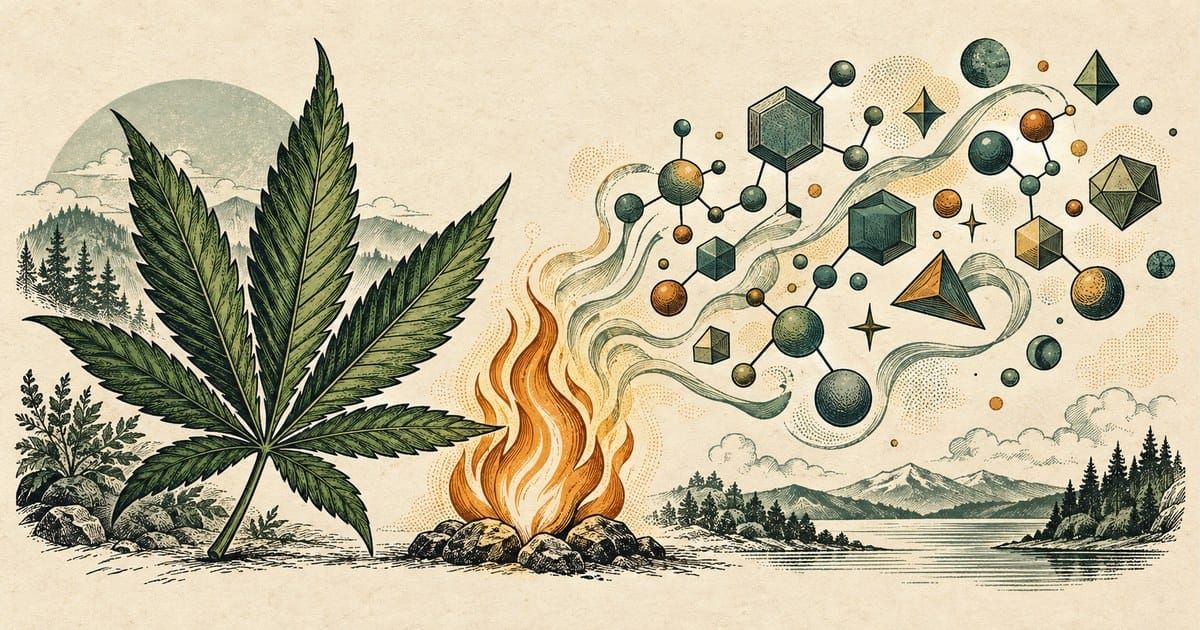
Researchers heated THC and detected 79 small-molecule breakdown products. They assigned identities to 75. That is an interesting chemistry finding, and a very tempting headline.[1]
It is not a tally of 79 proven poisons in someone's lungs. The experiment used THC reference material, not people smoking cannabis, and did not establish the doses inhaled during a typical smoking session.[1]
The useful question is what happens between a product leaving its package and reaching the person using it. We should want that information whether cannabis is used for pleasure, symptom relief or both. Wanting access and asking about avoidable harm are compatible positions.
A potency number cannot answer every question about a product. This paper helps explain why.
Quick Hits
- The research is new; the publication date is September 29. Niara A. Nichols, A. John Dane and Rabi A. Musah's paper appears in the Journal of Cannabis Research. The available PDF is an accepted Article in Press, awaiting the final edited version.[1]
- The count needs context. The 79 products were detected across five temperatures, not necessarily together at every temperature. The work focuses on a small-molecule portion of the analysis, rather than a complete inventory of cannabis smoke.[1]
- A reason to investigate is not a measured health outcome. Some identified products have previously reported adverse biological effects. The authors call for quantitative work to establish how much forms and whether those amounts can produce biological effects.[1]
That's the news. The analysis is below — Science Desk, Market Watch, and a closing thought.