The Alkaloid #36: Who DJs the Trip?
Who chooses the soundtrack for psychedelic therapy? An analysis of eight playlists finds only weak evidence for a shared musical arc, without testing whether the music helps patients.


Science, culture and capital — one dose at a time
The Dose
Górecki’s Third Symphony appears in four of the eight psilocybin-therapy playlists examined in a recent study.[2] Even in a field devoted to unusual experiences, a few records get repeat bookings.
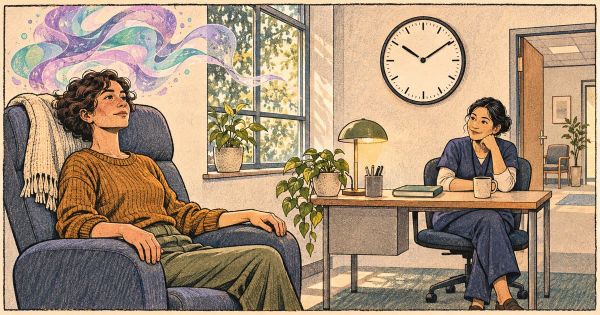
The musical territory is wider than that detail suggests: Western classical, ambient, electronic music, indie, post-rock, singing bowls and gongs all appear in the playlist descriptions.[2] Someone has to choose what goes on, and when.
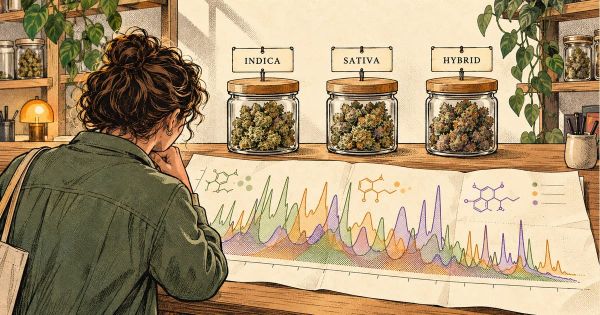
A peer-reviewed paper published October 8 in Scientific Reports asks whether those choices follow one of the field’s guiding ideas: that music should move through an arc matching the onset, peak and return of a psychedelic experience.[1] Across eight playlists and 45.1 hours of analyzed audio, the researchers found only weak, inconsistent evidence for that structure in the features they measured.[1]
This was an analysis of recordings, not a test of patient outcomes.[1] It cannot tell us whether the playlists help people, whether another sequence would help more, or what an individual listener actually hears and feels.[1]
It does give us a good reason to ask who is choosing the soundtrack—and how much of that choice is science, tradition or taste.
Quick Hits
- The collection: Eight playlists associated with Imperial College London, Johns Hopkins, Chacruna, Copenhagen and COMPASS Pathways; the main paper reports 369 analyzed tracks after exclusions from an initial 382.[1]
- The musical range: The supplement describes a mostly Western-classical Hopkins playlist alongside an overtone-focused version featuring instruments such as singing bowls, gongs and didgeridoo.[2]
- The missing listener: The emotion estimates came from audio models, not people undergoing therapy; neither model has been validated against human ratings of music used in psilocybin therapy.[1]
That's the news. The analysis is below — Science Desk, Market Watch, and a closing thought.