
The Alkaloid #34: The Label Isn’t the Chemistry
Indica, sativa, hybrid: familiar labels, unreliable predictions. What cannabis chemistry research can tell us—and what it cannot.

Science, culture and capital — one dose at a time
The Dose
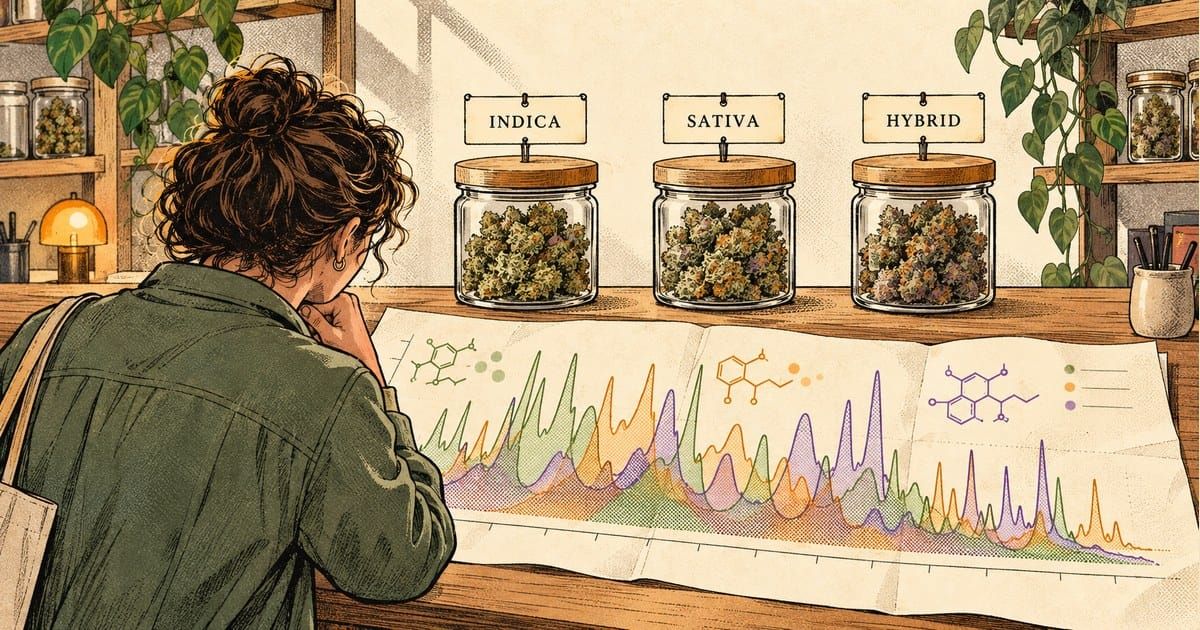
Picture three jars on a shop counter: indica, sativa, hybrid. Before anyone opens a laboratory report, the labels seem to have organized the afternoon. One suggests the sofa; another suggests finally answering those emails.
A new systematic review in the Journal of Cannabis Research, published October 24, asks whether that confidence is earned. Across 28 peer-reviewed reports, the authors found that these retail categories are unreliable guides to composition or therapeutic effects. Some associations appeared; they did not add up to dependable predictions. [1]
That deserves a careful reading, rather than another announcement that everyone buying cannabis has been doing it wrong. A useful question for a seller is what a label can substantiate. A useful question for a reader is where description ends and a promise begins.
Quick Hits
- The review combines 12 plant/product reports, one animal report and 15 human reports. That is not 28 clinical trials. [1]
- A 2022 U.S. laboratory-data study found chemical groupings that did not consistently follow indica, sativa and hybrid labels. [2]
- A 2021 genetics study found associations with particular terpenes, despite poor overall separation by label. A partial signal is worth keeping; it is not a complete classification. [3]
That’s the news. The analysis is below — Science Desk, Market Watch, and a closing thought.