The Alkaloid #37: The Mushroom Wasn’t Thinking About Us
A mushroom that makes both psilocybin and amatoxins raises an evolutionary question: what is this chemistry doing for the fungus?
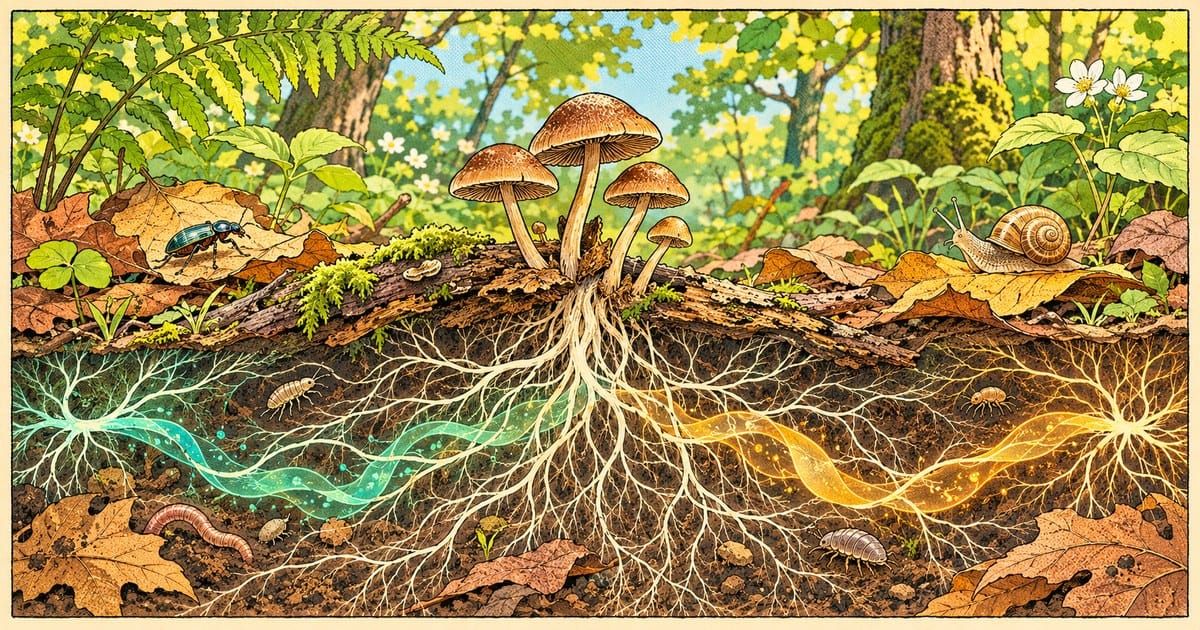
Science, culture and capital — one dose at a time
The Dose
A small brown mushroom in Florida has complicated a familiar distinction. Researchers found that Galerina indica produces both psilocybin and amatoxins, bringing psychedelic chemistry and a toxin family associated with deadly mushroom poisonings into the same species. The work appears in Current Biology. [1, 3]
The more interesting question is what the mushroom gets out of this arrangement. Its chemistry was doing something in a world of fungi and their neighbours long before anyone thought to call it magic.
Quick Hits
- The researchers paired chemical measurements with genomic analysis: compounds in the mushroom tissue, and genes associated with making them. [2, 3]
- Their evolutionary reconstruction suggests that the psilocybin-making machinery arrived through horizontal gene transfer. That is an inference from genetic comparisons, not a transfer witnessed in the laboratory. [2]
- The ecological advantage remains an open question. Producing both compound classes does not establish why either one helps this fungus. [2, 3]
That's the news. The analysis is below — Science Desk, Market Watch, and a closing thought.