Field Notes #1: Chokecherries and Cancer Cells
A Shoshone and Paiute student named Destany Pete tested her tribe's traditional chokecherry pudding against uterine sarcoma cancer cells — and only the traditional preparation worked. The science is preliminary. The story is worth understanding.
A post circulating on Bluesky this week showed a quote that stopped the scroll: a high school student from the Duck Valley Indian Reservation in Idaho and Nevada had won a science fair by testing her tribe's traditional chokecherry pudding against cancer cells in a university lab — and it worked.
The story is real. It is also from 2017. It has been circulating in waves on social media for years because it is genuinely compelling and because the mainstream science press has largely ignored it. Both of those things are worth sitting with for a moment.
Who Destany Pete Is
Destany "Sky" Pete is a member of the Shoshone and Paiute Tribes of the Duck Valley Indian Reservation, a community that straddles the Idaho-Nevada border. She was a high school junior when she began the project. The starting point was a conversation with a tribal elder, who told her that the reason community members were getting sick more often was that they had largely stopped eating traditional foods — chief among them toishabui, the Paiute word for chokecherry pudding.
That observation — that disconnection from traditional diet correlated with deteriorating community health — is not unusual in Indigenous communities, and it is not merely anecdotal. Epidemiological research on dietary transitions in Native American populations has documented similar patterns for decades. What made Pete's response unusual was that she decided to test the hypothesis scientifically.
Her high school science teacher connected her with Dr. Ken Cornell, a biochemistry professor at Boise State University who works with uterine sarcoma cancer cells. Together, they designed an experiment testing four variations of chokecherry preparation against those cells: traditional pudding made with crushed seeds, standard chokecherry preparation without seeds, commercial chokecherry juice, and a control.
What the Experiment Found
Only one of the four preparations had a measurable effect on the cancer cells: the traditional toishabui made with crushed chokecherry seeds. Within 24 hours, cancer cells began to die. The other three preparations — including the commercial juice and the seed-free preparation — showed no comparable effect.
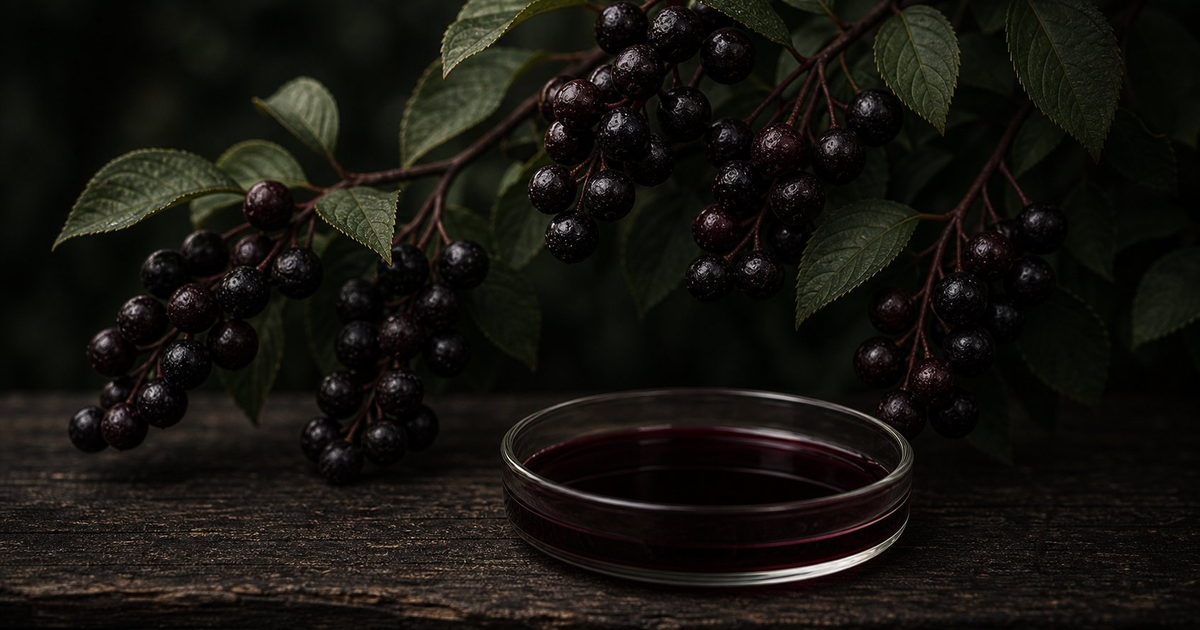
The result pointed directly to the seeds. The chokecherry, a member of the Prunus genus alongside peaches, apricots, and bitter almonds, contains cyanogenic glycosides in its pits — compounds that release small amounts of hydrogen cyanide when metabolized. This is also the compound at the center of decades of contested research on amygdalin, better known as laetrile or "vitamin B17," which was promoted as an alternative cancer treatment in the 1970s and has remained a subject of scientific controversy ever since.
The traditional preparation method — boiling the crushed seeds — is key. Boiling neutralizes the cyanide toxicity while potentially preserving the compounds that showed cytotoxic activity against the cancer cells. The Shoshone and Paiute did not develop this preparation by accident. Generations of refinement produced a method that happened to thread a narrow needle: retain the beneficial chemistry of the seeds, eliminate the dangerous chemistry.
Pete's project won First Grand Prize at the 2017 Elko County Science Fair in Nevada, out of more than 440 entries, and later gained international recognition at the science fair in Los Angeles.
What the Science Does and Does Not Mean
In vitro means in a lab dish. Cancer cells responding to a compound in controlled laboratory conditions is a first step in a research pipeline that typically runs a decade or more before producing a usable treatment — if it produces one at all. Many compounds that kill cancer cells in vitro fail in animal models. Many that succeed in animal models fail in human trials. In vitro results are not a cancer cure, and reporting them as such — as much of the viral coverage of Pete's work has done — misrepresents the science and does a disservice to the actual finding, which is genuinely interesting.
What the finding actually represents is a hypothesis worth pursuing. The specific activity of the traditional preparation — and not the commercial or seed-free variants — suggests that something in the whole-seed preparation has measurable cytotoxic activity against uterine sarcoma cells under laboratory conditions. That is a precise, reproducible, publishable observation. It is also an observation that would cost very little to follow up on in a more rigorous institutional context, and has apparently not been.
That gap — between a promising in-vitro finding connected to traditional Indigenous preparation and the absence of institutional follow-up — is the actual story.
The Larger Question
A significant portion of modern pharmacology traces its origins to plant compounds that Indigenous and traditional communities identified and refined over centuries. Aspirin derives from willow bark. Quinine from Cinchona bark, long used by Quechua people in South America. Artemisinin, the front-line malaria treatment, from a Chinese traditional medicine plant. The pipeline from traditional knowledge to pharmaceutical development is well-established. What is less established is any systematic mechanism for ensuring that the communities whose knowledge seeded that development receive acknowledgment, credit, or benefit from the compounds that reach market.
Destany Pete's project is a small and clear example of the same dynamic. A high school student, motivated by her community's health, used institutional resources to test a traditional preparation and produced a result that should, in a functioning research ecosystem, prompt follow-up. Instead, it produced a viral social media cycle every eighteen months or so, accompanied by headlines claiming she "proved" chokecherries cure cancer.
Neither outcome serves the finding or the community it came from.
"I want people to know that science and culture can be represented together," Pete said after the project gained recognition. That framing — not "traditional knowledge vs. modern science" but traditional knowledge and modern science — is the one that matters. The chokecherry tree spans the North American continent. Generations of Shoshone and Paiute people figured out something important about it. A high school student turned that knowledge into a testable hypothesis and got a result. The question is what happens next.
So far, not much. That might be the most important thing to know about this story.
— The Alkaloid
Sources
Indian Country Today — Bringing Science and Culture Together: Chokecherry Pudding: https://ictnews.org/archive/bringing-science-culture-together-chokecherry-pudding/
PMC — Amygdalin: Toxicity, Anticancer Activity and Analytical Procedures for Its Determination in Plant Seeds: https://www.ncbi.nlm.nih.gov/pmc/articles/PMC8069783/
PMC — Amygdalin: A Review on Its Characteristics, Antioxidant Potential, Anticancer Therapeutic and Mechanisms, Toxicity, and Encapsulation: https://pmc.ncbi.nlm.nih.gov/articles/PMC9599719/
Ask Dr. Nandi — Native American Chokecherry Recipe Demonstrates Remarkable Cancer Cell Destruction: https://askdrnandi.com/native-american-chokecherry-recipe-demonstrates-remarkable-cancer-cell-destruction/