Field Notes #5: The Animals That Get High on Purpose
Jaguars roll in the ayahuasca vine. Reindeer hunt psychedelic mushrooms in the snow. Wallabies leave crop circles in Tasmania's poppy fields. The urge to get high isn't uniquely human — one researcher called it a fourth drive, as deep as hunger and thirst.

Do animals get high? Not by accident, the way a dog finds your edibles, but on purpose, seeking the plant out and coming back for more? The answer turns out to be yes, and they have been at it far longer than we have.
Once you start looking, the examples pile up. A jaguar in the Amazon chews a bitter vine and spends the afternoon rolling in the dirt. Reindeer in Siberia dig through snow for a red-and-white mushroom that makes them stagger. Wallabies in Tasmania wander into legal opium fields and trample circles into the crop. The urge to alter the mind is not a human invention. It may not even be a mammal one.
The jaguar and the vine
The most cinematic case is the jaguar. In the western Amazon, big cats have been filmed gnawing the roots and bark of Banisteriopsis caapi, the same vine that forms the backbone of ayahuasca. Afterward they do something distinctly un-jaguar-like: they flop onto their backs, paw at the air, and stare into the canopy with the loose contentment of a house cat in a sunbeam.
It is worth being precise about what is happening, because the headlines rarely are. B. caapi is rich in harmala alkaloids, which are MAO inhibitors. In a full ayahuasca brew those alkaloids exist to let DMT from a second plant survive digestion and reach the brain. The jaguar, chewing the vine alone, gets the MAOIs without the DMT. So it feels something real, but probably not the visionary trip the word ayahuasca implies. Call it the cat's aperitif, not the whole meal.
Reindeer, mushrooms, and the original flying sleigh
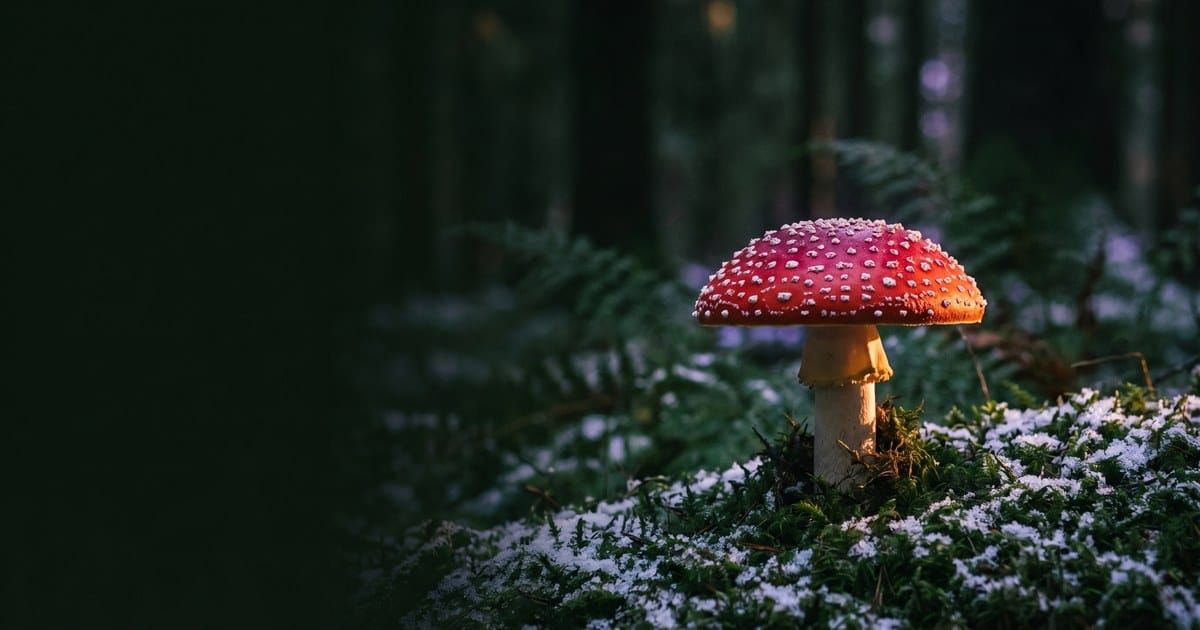
In the Arctic, reindeer actively hunt Amanita muscaria, the storybook toadstool with the red cap and white spots. They eat it, then lurch, twitch, and make odd noises. Siberian and Sámi herders noticed this centuries ago and drew a practical, slightly horrifying conclusion. The mushroom's active compounds, ibotenic acid and muscimol, pass through the body and concentrate in urine while much of the toxic load does not. So people drank the urine of reindeer, or of other people, who had eaten the mushroom, taking the high with less of the poison. The picture of intoxicated reindeer leaping through the snow is, not coincidentally, one of the threads folklorists tug when they argue about where the flying-reindeer story came from.
The dark side: drunk birds
Not all of this is whimsical. Every late winter, cedar waxwings gorge on berries that have fermented on the branch, and the alcohol hits them the way it hits us, minus the judgment. They fly into windows. They fall out of trees. In one Texas case, roughly fifty waxwings were found dead along a road after a berry binge, several with enough alcohol in them to count as poisoning. Intoxication in the wild has a body count, and the animals don't get to call it a night.
The poppy circles of Tasmania
Tasmania grows a large share of the world's legal pharmaceutical opium, and the local wallabies have noticed. In 2009 the state's attorney general told a budget hearing, in what may be the finest sentence ever spoken in a budget hearing, that wallabies were getting "as high as a kite" in the poppy fields and then hopping in circles until they crashed, leaving crop-circle patterns behind. Sheep and deer reportedly join in. The wallabies, notably, come back.
The one everyone gets wrong
You have probably seen the clip of dolphins passing a pufferfish around and going slack afterward, narrated as the dolphins "getting high" on the fish's nerve toxin. It made a great BBC documentary moment. It is also the shakiest case on this list. Dolphin researchers point out that the animals pass objects in ordinary play, that a numbing toxin is not the same as a recreational one, and that no controlled study has shown intent. File it under maybe, not yes. The honest version of this story doesn't need the dolphins.
A fourth drive
The psychopharmacologist Ronald K. Siegel spent decades cataloguing this behavior across species, from slugs to elephants, and concluded that the pursuit of intoxication is not an accident or a vice but a drive, a built-in motivator he ranked alongside hunger, thirst, and sex. He called it the fourth drive. If he was right, the framing of intoxication as a modern moral failure gets the story backward. The impulse is old, it is widespread, and we share it with the jaguar, the reindeer, and the drunk little bird in the hedge.
That doesn't make every substance safe or every choice wise. The waxwings settle that. But it does suggest the question worth asking isn't why so many humans seek altered states. It's why we ever assumed we were the only ones.
— The Alkaloid
Sources
- IFLScience / Ultraculture — jaguars and the Banisteriopsis caapi (yagé) vine
- Wikipedia / Kew / NPR — reindeer, Amanita muscaria, and Siberian/Sámi practice
- Audubon / WFAA — cedar waxwings and fatal fermented-berry intoxication
- NPR / Foreign Policy — Tasmanian wallabies in legal opium poppy fields (2009)
- Grist / NBC News — the skeptical take on the dolphin-pufferfish "high" claim
- Ronald K. Siegel, "Intoxication: The Universal Drive for Mind-Altering Substances"
The Alkaloid publishes every Tuesday, with the occasional Field Note in between. Forward this to someone who'd enjoy it. Subscribe for full access: TheAlkaloid.com