The Alkaloid #23: The Question It Was Asking
PsiDeR was built to answer whether the NHS could run a psilocybin trial at all. It could. The 12.92-point depression result everyone reported is a secondary outcome, and the researchers said so plainly. Their press office left that part out. Plus: the Senate blinks on hemp.
Science, culture and capital — one dose at a time
The Dose
On August 6, Nature Medicine published PsiDeR, a psilocybin trial run inside the NHS by a team at King's College London and the South London and Maudsley NHS Foundation Trust. Sixty people with treatment-resistant depression. A single 25 mg dose against a genuinely inert placebo. By week six, a gap of 12.92 points on the MADRS depression scale, with a confidence interval running from 8.47 to 17.37. Half the psilocybin group met the threshold for response. Forty percent were in remission. In the placebo arm, that was one person out of thirty.
Those are large numbers. They are also not what the trial set out to measure.
PsiDeR's primary outcomes, in the paper's own words, were "recruitment, retention and estimation of the Montgomery−Åsberg Depression Rating Scale (MADRS) variance." It was a feasibility trial. The question it was built to answer was whether a publicly funded psychedelic trial could be run inside an ordinary health service at all: whether patients would come, whether they would stay, and how much their depression scores would scatter, so that somebody could properly power a real efficacy trial afterward. Every depression result you read about this week sits in the secondary analysis. The paper states flatly that the trial "was not powered for efficacy."
On its actual question, it did well. Seventy-five people screened, sixty-two eligible, sixty randomised, full attendance on dosing day, and fifty-nine of sixty still completing depression ratings six weeks later. Partway through, the team moved dosing out of a hospital research facility and into a community mental health setting. Nothing broke. Catherine Bird, one of the investigators, put it about as plainly as a scientist can: a calm room and trained staff in the community suited most patients fine, and they saw no new safety signals.
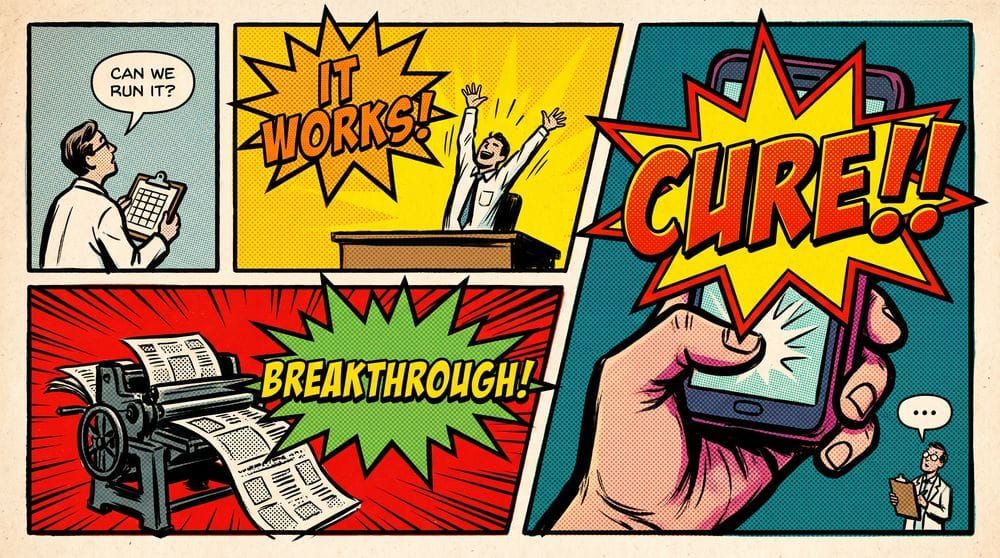
The research team was careful about all of this. Their own discussion section is where you find the sharpest caveats in the whole story. King's College London's press office was less careful. Its release describes the primary outcome as the MADRS score at three and six weeks and does not use the word feasibility anywhere. That is the version that travelled.
Quick Hits
The Senate blinked, by twenty-nine days. On August 8, Amy Klobuchar's motion to table Ted Budd's amendment carried 61–32, preserving the continuing resolution's push of the federal 0.4 mg total-THC hemp ban from November 12 to December 11. The funding bill then passed 90–6. Four days earlier, thirty-four state attorneys general plus the US Virgin Islands had written to Congress asking it to reject exactly that delay. They lost.
Texas gets to keep its ban for now. On August 10, US District Judge Jeffrey Brown denied a temporary restraining order sought by two hemp retailers and a distributor challenging Texas's reclassification of delta-8, delta-10, THCP and THCA flower as Schedule I. The plaintiffs argued the 2018 Farm Bill preempts the state rule. The court was unpersuaded, at least at this stage. It is a preview of the arguments coming in December.
Square is not waiting for Congress. On August 7, the payment processor told merchants to strip all CBD, hemp and hemp-derived products from their catalogs, online and in person, by October 15. The Senate's one-month delay does not move Square's date. When a processor decides an entire product category is not worth the compliance risk, the legal status of the product stops being the operative question.
The VA opened a five-site psilocybin trial. Announced August 5, PIVOT will enrol at least 240 veterans with treatment-resistant depression across Birmingham, Tuscaloosa, Portland, Philadelphia and Puget Sound, comparing two dose levels and running through June 2031. The VA says it is now involved in twenty active psychedelic clinical trials.
Georgia loosened its medical program and got buried. The patient registry went from 36,595 in late June to 44,854 by early August, an increase of 8,259 people in a month. Processing time stretched from a week to four. The July expansion dropped THC potency caps, allowed vaping for adults 21 and over, and added lupus and IBS. Industry estimates put the eventual eligible population somewhere between 300,000 and 400,000.
Delaware's first year came in at nineteen percent of forecast. $53.4 million in adult-use sales between August 2025 and August 2026, against the $281 million the state's first marijuana commissioner projected. Tax revenue was just over $8 million. Only converted medical shops are open so far, and the current commissioner is warning that opening more stores without more cultivation just pushes prices up.
That's the news. The analysis is below — Science Desk, Market Watch, and a closing thought.
Science Desk
A feasibility endpoint is not a technicality. It changes what a result licenses you to say.
When a trial is powered for efficacy, the sample size is calculated in advance so that a difference of a particular size can be distinguished from noise with a stated error rate. When a trial is powered for feasibility, the sample size is whatever is needed to estimate that noise. You run it precisely because you do not yet know how much depression scores bounce around in this population, in this setting, with this measurement schedule. The efficacy numbers that fall out are real observations, but they are estimates with wide uncertainty, generated by a design that was not built to protect against being fooled.
PsiDeR's own confidence intervals show this honestly. The week-six difference of 12.92 points carries an interval from 8.47 to 17.37. That is a wide window, and it is wide because sixty people is sixty people.
The second issue is the placebo arm, and the paper raises it before any critic could. The MADRS and QIDS-SR scores in the placebo group barely moved across the whole six weeks. In most depression trials the placebo arm improves substantially, which is why beating placebo is hard. Here it did not budge, and the authors concede that "a part of this effect is likely attributable to a lack of response or remission in the placebo arm." A between-group gap is a subtraction. If one side of the subtraction sits still, the gap grows without the drug doing anything extra.
Why might a placebo arm sit still? Because people knew. The team asked twenty-three of the sixty participants to guess their allocation. All thirteen asked in the psilocybin arm guessed correctly. Seven of ten in the placebo arm did too. The authors call the limited assessment of blinding a weakness of the trial, and they are right, though the deeper problem is that no amount of assessment fixes it. You cannot blind a 25 mg dose of psilocybin. Someone who signed up for a psychedelic trial, swallowed a capsule, sat for six hours with a therapist and felt nothing has learned something about their next six weeks that has nothing to do with pharmacology.
The authors then make an argument worth sitting with rather than dismissing. Expectancy in psychedelic trials, they write, is not purely a source of bias, because the therapeutic model "relies on the subjective drug effects and their integration." If the mechanism runs through the experience, then separating drug effect from expectation may be asking the wrong question of the wrong instrument. That is a serious point. It is also, conveniently, unfalsifiable, and a field that leans on it too heavily stops being able to tell itself when it is wrong.
Two more things belong on the record. The drug and the matching placebo were supplied by COMPASS Pathways, and roughly half the participants were dosed in a facility that exists because of a later financial agreement with the same company. The trial itself was funded by the National Institute for Health and Care Research, and COMPASS had no role in design, conduct, analysis or the decision to publish. The paper says all of this in its funding statement, unprompted. And the sample was unusually well educated, with far more university graduates than the general population, while recruitment of Black, African, Caribbean and Black British participants fell short of target. The team names that as a limitation it intends to fix in the follow-on trial.
On safety the result is clean. Four serious adverse events across the study, three in the psilocybin arm and one in placebo. None was judged related to psilocybin. The single event deemed possibly related occurred in the placebo group.
Market Watch
The capital is not waiting for the evidence to settle, and it is not obviously wrong to move first.
Compass Pathways closed August 11 at $13.38, a market capitalisation of $1.81 billion, up roughly 329% over the year. Both of its phase 3 trials of COMP360 hit their primary endpoints, COMP005 in June 2025 and COMP006 in February 2026, though the effect sizes there are worth holding next to PsiDeR's: placebo-adjusted MADRS differences of 3.6 and 3.8 points at week six, in trials with proper efficacy power and thousands of participants. Compass reported $433.3 million in cash at the end of June, guides to a final NDA submission in the fourth quarter, and anticipates a commercial launch in the first half of 2027 if approval and DEA rescheduling both land.
Elsewhere in the pipeline, Definium Therapeutics, which was MindMed until January, reported phase 3 results this morning in generalised anxiety disorder: an 11.6-point drop on the HAM-A scale against 6.2 for placebo. Its market capitalisation sits at $5.5 billion. Eli Lilly's agreement to acquire AtaiBeckley for $2.8 billion upfront and up to $3.8 billion with milestones was announced July 16 and has not yet closed.
Now hold that against the only place in America where regulated psilocybin services actually exist at scale. Oregon's programme has served somewhere around twenty thousand people since January 2023 and has generated just over $2 million in cumulative programme revenue across the entire period. A session runs between $850 and $3,000, and average client household income in the first quarter of this year was about $172,000. Roughly a third to a half of licensed service centres have closed or surrendered their licences. Regulators have proposed doubling annual fees, taking service centres from $10,000 to $20,000 and facilitator work permits from $25 to $200, and licensees are saying publicly that the industry cannot absorb it.
There is no confirmed insurance coverage decision for psilocybin therapy anywhere in the United States. Not from a commercial payer, not Medicare, not Medicaid. Coverage requires FDA approval and DEA rescheduling, and neither has happened.
The comparison that should anchor everyone's expectations is Spravato. J&J's esketamine did $584 million in the second quarter of 2026 alone. One approved, reimbursed, in-clinic product with a similar delivery burden is grossing more in three months than most forecasts assign the entire psychedelic drug market for a year. The bottleneck was never the molecule.
The Last Word
The easy version of this story is that researchers oversold their results. That version is wrong, and it is worth saying so clearly. Rucker and his colleagues stated their primary outcomes in the abstract, disclosed their funding entanglements without being asked, published the blinding guesses that undercut their own headline number, and volunteered that the placebo arm's flatness inflated the gap. If every trial were reported this way the field would be in better shape.
What is missing is on the other side of the transaction. As of this writing there is no Science Media Centre expert reaction to PsiDeR, no accompanying editorial in Nature Medicine, no named independent researcher on record about it. Every cautionary quote in circulation comes from the trial's own authors. A careful paper went out into the world, a press release sanded off the part that mattered most, and nobody with standing was asked to check.
The trial showed that the NHS can run this. That is a real and useful finding, and it is the one the researchers went looking for. The rest is a promising estimate with a wide interval, waiting on a study built to test it.
— The Alkaloid
Sources
- Rucker, J.J., et al. "Psilocybin-assisted therapy for treatment-resistant major depressive disorder in a public healthcare setting: a randomized controlled trial." Nature Medicine, 6 August 2026. DOI 10.1038/s41591-026-04541-0. NCT04959253.
- King's College London, "Promising results from first publicly funded UK randomised trial of psilocybin for depression," 6 August 2026.
- News-Medical, "Single-dose psilocybin shows promise for treatment-resistant depression in NHS trial," 10 August 2026.
- Marijuana Moment, Senate hemp THC ban delay vote, 8 August 2026.
- Cannabis Business Times, attorneys general letter to Congress, 4 August 2026.
- Marijuana Moment, Texas hemp restrictions ruling (Judge Jeffrey Brown, S.D. Tex.), 10–11 August 2026.
- Marijuana Moment, Square merchant notice on hemp and CBD, 7 August 2026.
- US Department of Veterans Affairs press room, PIVOT psilocybin trial launch, 5 August 2026.
- Marijuana Moment, Georgia medical cannabis registry backlog, 9 August 2026.
- Marijuana Moment and MJBizDaily, Delaware first-year adult-use sales, 10 August 2026.
- Compass Pathways, Q2 and H1 2026 financial results, 5 August 2026; COMP005 topline 23 June 2025; COMP006 topline 17 February 2026.
- Definium Therapeutics, Voyage phase 3 topline in generalised anxiety disorder, 12 August 2026.
- Eli Lilly, agreement to acquire AtaiBeckley, 16 July 2026.
- Psychedelic Alpha, Oregon Psilocybin Services Tracker, Q1 2026.
- Oregon Capital Chronicle, proposed psilocybin licence fee increases, 6 July 2026.
- BioSpace, J&J Spravato Q2 2026 sales.
The Alkaloid publishes every Tuesday. Forward this to someone who needs the dose. Subscribe for full access: TheAlkaloid.com