Field Notes #4: The Anti-Inflammatory Trip You Can't Feel
People are searching for "microdose therapy for chronic inflammation" and finding wellness sites that promise more than the science can back. Psychedelics show real anti-inflammatory promise in the lab. Whether a microdose delivers it in a human body is a different, much shakier question.
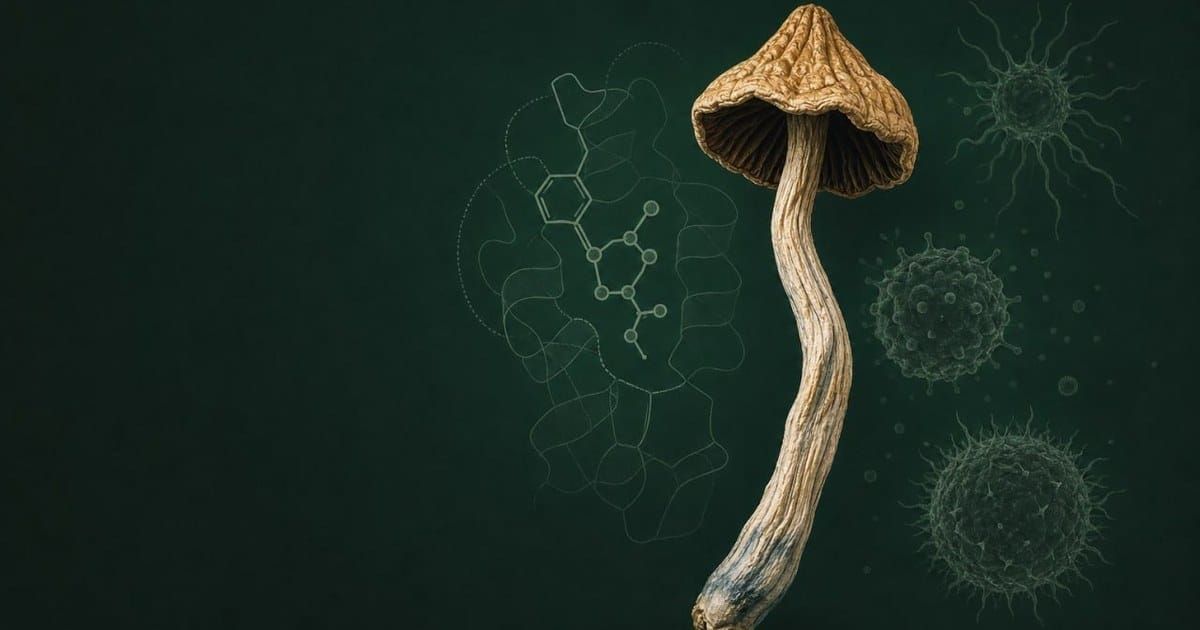
The search traffic tells a small story. People are typing "microdose therapy for chronic inflammation" into Google and landing on a wall of wellness sites that promise a sub-perceptual dose of psilocybin will quiet aching joints and lower C-reactive protein. The promise is oddly specific. The evidence behind it is not. That gap is worth standing in for a minute, because both sides of it are real, and most of the internet only shows you one.
Start with the part that genuinely excites me. Psychedelics do something to inflammation, and the mechanism isn't hand-waving. The 5-HT2A receptor, the same one that drives the trip, also sits on immune cells and helps run the inflammatory response. When researchers switch it on, they've watched it shut down TNF-alpha, one of the body's main inflammatory signals, at doses well below what you'd need for any other effect. A 2025 review in the International Review of Neurobiology went as far as calling serotonergic psychedelics potent anti-inflammatories. In human intestinal tissue grown in a dish, psilocybin quieted the inflammatory cascade enough that the authors raised it as a possible future tool for inflammatory bowel disease.
So the headline writes itself. Magic mushrooms fight inflammation.
Then you read the methods sections, and the headline falls apart. Almost none of that work used a microdose, and almost none of it happened in a living person. The intestinal study was tissue in a lab. The receptor work is mostly mice and cell cultures. And the doses that produced these effects were often full psychoactive ones, the kind that come with a six-hour experience, not the kind you take with coffee and feel nothing from.