Field Notes #3: The Molecule Without the Ceremony
A London lab gave 34 depressed people a single IV dose of DMT, the compound in ayahuasca, and saw depression scores fall for up to six months. No ceremony, no all-night vigil, no nausea. Just the molecule. Which raises a question the trial can't answer: how much was ever the chemical alone?
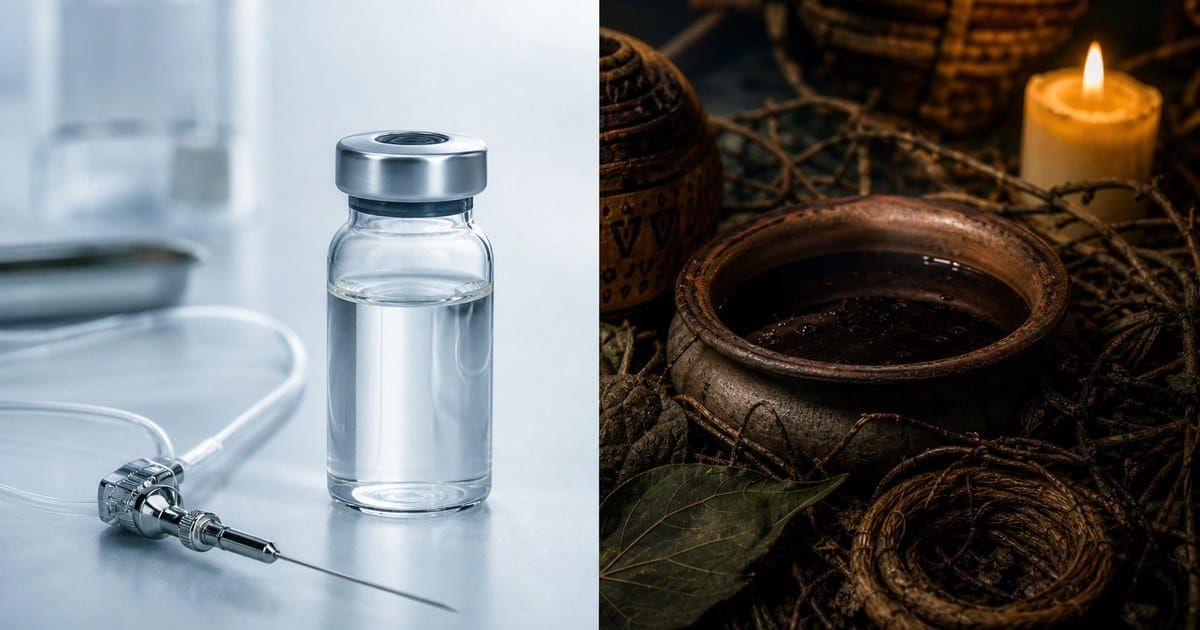
For centuries, the way you took ayahuasca was the point. You sat with a trained healer, often through the night, in a ceremony built around the experience: the icaros, the purging, the darkness, the community around you. The brew itself was only one element of a much larger ritual technology, refined over generations in the Amazon to do something specific to the human mind.
In February, researchers at Imperial College London published a result that quietly pulls that whole apparatus apart. They took the active molecule out of the ceremony, put it in a syringe, and it still worked.
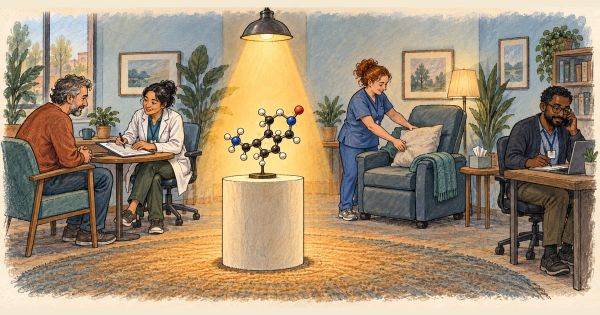
The trial, published in Nature Medicine, gave 34 people with moderate-to-severe depression a single intravenous dose of DMT, the primary psychoactive compound in ayahuasca. Every participant had already failed at least one previous treatment. Half got 21.5mg of DMT infused over about ten minutes; half got a placebo. Everyone received the same psychological support before and during the session. Two weeks later, the DMT group showed a significantly greater drop in depression scores than the placebo group. For some participants, the improvement lasted up to six months.
What makes this notable isn't just that it worked. It's how fast it was over.
An ayahuasca ceremony can run for hours. Psilocybin therapy, the better-known psychedelic treatment, requires sessions of four to six hours with continuous supervision, which is part of why it's so expensive and hard to scale. DMT, by contrast, clears the body quickly. The intense part of the experience lasts roughly half an hour. The researchers are blunt about why that matters: a shorter session is a cheaper, more practical session, and practicality is the thing standing between psychedelic therapy and the millions of people who might use it.
So that's the science, and it's genuinely promising. But it leaves a harder question sitting in the room.