The Alkaloid #3: Five Drugs, One Brain Signature
Why do psychedelics with different chemistries — psilocybin, LSD, DMT, mescaline, ayahuasca — produce experiences described in such similar terms? An international consortium published the largest psychedelic brain imaging study ever. The answer rewrites the dominant theory.
THE ALKALOID
Science, culture and capital — one dose at a time.
Issue #3 — April 28, 2026
THE DOSE
Five Drugs, One Brain Signature
For decades, neuroscientists have asked a question that seemed unanswerable. Why do psychedelics with completely different chemistries — psilocybin, LSD, DMT, mescaline, ayahuasca — produce experiences that participants describe in such remarkably similar terms? Ego dissolution. The blurring of self and environment. A sense of expanded consciousness. Across cultures, across compounds, across centuries, the language people reach for is uncannily consistent.
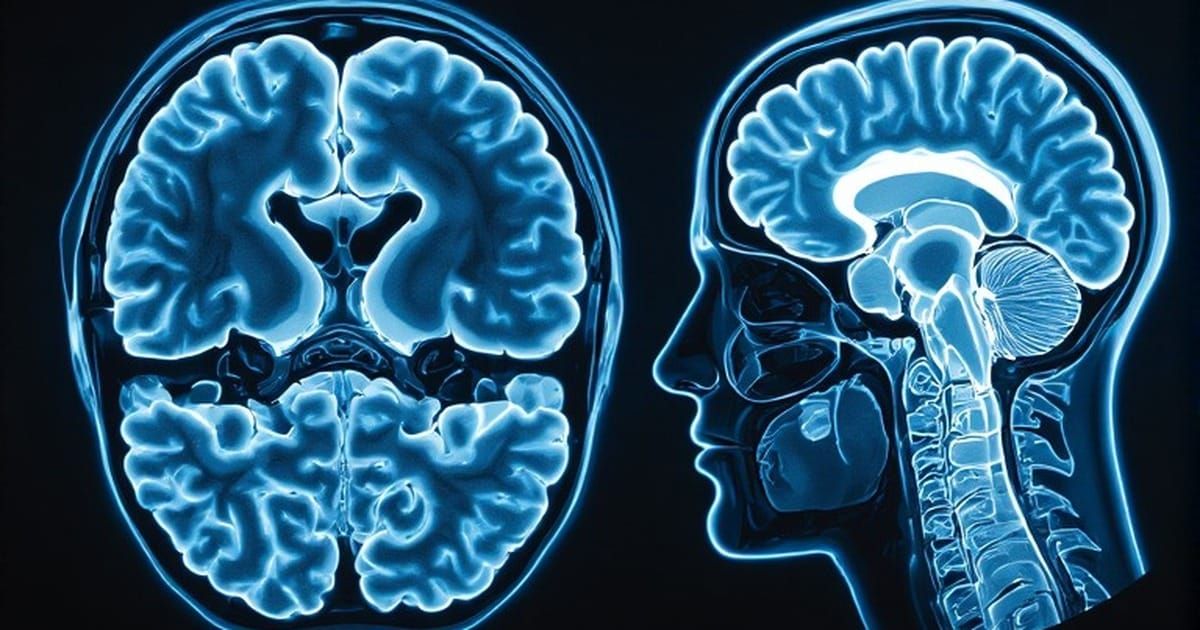
This month, an international consortium of neuroscientists led by McGill University researcher Danilo Bzdok published the largest psychedelic brain imaging study ever conducted, and the answer it suggests is genuinely paradigm-shifting. Despite their distinct molecular structures, all five compounds appear to produce the same neural signature in the human brain.
The study, published April 7 in Nature Medicine, pooled data from eleven separate datasets spanning three continents. The total — 500 brain imaging sessions across 267 participants — represents an order of magnitude more data than any single psychedelic neuroscience study has ever achieved. To get a sense of the scale, consider that typical psychedelic neuroscience studies involve ten to thirty participants because of the cost and regulatory complexity of running them. Studying five different psychedelics in a single experiment, the authors note, would be nearly impossible at any one institution.
What the consortium found rewrites the narrative that has dominated psychedelic neuroscience for over a decade. The dominant theory, advanced by researchers like Robin Carhart-Harris at Imperial College London, has long held that psychedelics work primarily by disrupting the default mode network — the brain system associated with self-referential thinking and the sense of an autobiographical "I." The breakdown of this network was thought to explain ego dissolution and the therapeutic potential of psychedelics for depression and anxiety.
The new mega-analysis suggests something different and more elegant. Rather than simply causing brain networks to fall apart, psychedelics produce two consistent and measurable effects across all five compounds. First, the connections within individual brain networks weaken — making them less rigidly structured but not dissolved. Second, communication between different brain networks dramatically increases, allowing signals to cross boundaries that are normally separate.
The researchers call this pattern a neural fingerprint of psychedelic states. It is, in essence, the brain becoming more cross-connected and less compartmentalized — a temporary loosening of the architectural rules that normally keep different cognitive systems running on their own tracks.
If this finding holds up under further scrutiny, it has profound implications for therapeutic design. It means the underlying mechanism that makes psychedelics potentially useful for treatment-resistant depression, PTSD, and addiction is not unique to any one compound. The therapeutic effect may be a function of the neural signature itself — and that opens the door to designing new compounds that produce the signature without necessarily producing the full subjective experience.
QUICK HITS
- FDA awards three priority vouchers. Following the executive order, the FDA quietly awarded Commissioner's National Priority Vouchers to three undisclosed companies developing psilocybin for treatment-resistant depression, psilocybin for major depressive disorder, and methylone for PTSD. Compass Pathways confirmed it received one of the vouchers for COMP360. The voucher program shortens FDA review times from the usual 10 to 12 months down to 1 to 2 months.
- Cannabis and the developing brain. UC San Diego published findings in Neuropsychopharmacology on April 20 from the largest long-term study of adolescent brain development ever conducted. Analyzing data from over 11,000 participants in the Adolescent Brain Cognitive Development Study, researchers found teenagers who begin cannabis use show measurably slower gains in thinking and memory skills as they grow.
- Cambridge convenes psychedelic researchers. The second annual Cambridge Psychedelic Research Day took place April 24 at Clare College, bringing together leading international researchers to present new findings on psychedelics and empathogens as treatments for mental health conditions. The growing institutional infrastructure around this research is itself a meaningful signal.
- Compass advances PTSD trial. Alongside its priority voucher for treatment-resistant depression, Compass Pathways announced the FDA approved a rolling new drug review request for COMP360 in post-traumatic stress disorder, expanding the compound's potential indications.
- Texas funds ibogaine research. When Texas failed to find an institutional partner to match its $50 million ibogaine research commitment, the state announced it would supply the entire $100 million itself. The federal executive order's $50 million matching fund provision appears to have been drafted partly in response.
SCIENCE DESK
The default mode network and the self that lives there
To understand why the new mega-analysis matters, it helps to understand what the default mode network actually does. Discovered in the late 1990s, the DMN is a set of interconnected brain regions that becomes most active when the mind is at rest — not focused on any external task. It is associated with self-referential thinking, autobiographical memory, mind-wandering, and the construction of what neuroscientists call the narrative self.
The narrative self is the story we tell ourselves about who we are. It is the voice that says "I went to college, I work at this job, I have these relationships, I am this kind of person." The DMN appears to be the neural substrate where this narrative is continuously rehearsed and reinforced. In conditions like depression and chronic anxiety, the DMN becomes hyperactive and rigid, locking the narrative into negative self-referential loops that are notoriously difficult to interrupt.
The earlier model held that psychedelics produced their therapeutic effects primarily by temporarily silencing this network — quieting the rigid narrative self and allowing the brain to reorganize. The new findings suggest a more nuanced picture. The DMN doesn't simply go offline. Its internal connections weaken, but its communication with other networks dramatically increases. Sensory information cross-talks with abstract reasoning. Emotional processing connects with autobiographical memory in unfamiliar ways. The brain becomes, briefly, a less compartmentalized system.
This is consistent with what people consistently report during psychedelic experiences — a perception that thoughts, sensations, emotions, and memories are no longer arriving in separate channels but flowing together as something more unified.
It is worth noting one important methodological caveat raised by Peter Bandettini, chief of functional imaging methods at the National Institute of Mental Health. The connectivity changes observed in fMRI studies could reflect direct vascular effects of the drugs rather than purely altered neural activity. The findings are robust, but the field still requires substantially larger datasets before any psychedelic biomarker approaches clinical readiness.
MARKET WATCH
The neural fingerprint findings arrive at a moment when the psychedelic biotech sector is already absorbing significant tailwinds from the executive order and the FDA's rapid follow-through on priority vouchers. Compass Pathways, Cybin, and AtaiBeckley have all seen meaningful gains over the past two weeks, with the underlying investment thesis shifting from speculative to near-term catalyst-driven.
The deeper investment implication of the Bzdok study is one most market analysts haven't yet absorbed. If a shared neural signature is what produces therapeutic effects across compounds, then the future of psychedelic medicine may not be dominated by single-molecule plays. It may favor companies developing compounds that produce the signature efficiently, or those exploring synthetic analogs designed around the signature itself.
This is exactly what biotech firms like Biomind Labs are pursuing with proprietary 5-MeO-DMT formulations and what Definium Therapeutics is building with optimized LSD derivatives. Investors evaluating the space now have a new framework to apply — not just which compound, but which neural mechanism, and how efficiently the candidate produces it.
The cannabis side of the market remains in stasis. Federal rescheduling continues to be slow-walked. The November hemp THC ban deadline approaches with no legislative resolution. Capital is flowing distinctly toward psychedelics this quarter and the gap between the two sectors is widening.
THE LAST WORD
There is something fitting about a study this scientifically rigorous arriving at a conclusion that mystics and indigenous traditions have been pointing at for centuries. The boundaries we experience — between self and other, between sensation and thought, between memory and imagination — are not fixed features of consciousness. They are constructions the brain maintains, and they can be temporarily loosened.
What science is now mapping in fMRI scanners, the Mazatec curanderas of Oaxaca have understood through psilocybin ceremonies for generations. What Danilo Bzdok calls a neural fingerprint of cross-network communication, the Shipibo of the Peruvian Amazon describe through ayahuasca as the dissolution of the spaces between things.
The scientific framework and the indigenous framework are not in competition. They are describing the same phenomenon from different vantage points. The danger now is that institutional medicine, in its rush to commercialize what the data are revealing, treats the science as the only legitimate way of knowing — and renders invisible the traditions that preserved this knowledge through the decades when Western medicine refused to take it seriously.
The neural fingerprint is real. So is the wisdom of the people who mapped it first.
— The Alkaloid
Sources
- McGill University — Largest-ever study of psychedelics: https://www.mcgill.ca/newsroom/channels/news/largest-ever-study-psychedelics-could-help-advance-their-use-treating-mental-health-disorders-372257
- Nature Medicine — An international mega-analysis of psychedelic drug effects on brain circuit function: https://www.nature.com/articles/s41591-026-04287-9
- Medscape — What 500 Brain Scans Reveal About How Psychedelics Work: https://www.medscape.com/viewarticle/mystery-solved-how-psychedelics-affect-brain-2026a1000ax5
- BioSpace — FDA awards priority vouchers to 3 undisclosed companies: https://www.biospace.com/fda/fda-awards-priority-vouchers-to-3-undisclosed-companies-for-investigational-psychedelics
- News-Medical — UC San Diego adolescent cannabis study: https://www.news-medical.net/condition/Cannabis
- Petrie-Flom Center — A New Executive Order on Psychedelics: https://petrieflom.law.harvard.edu/2026/04/18/a-new-executive-order-on-psychedelics-q-a-with-i-glenn-cohen-and-mason-marks/
- Cambridge Neuroscience — Second Cambridge Psychedelic Research Day: https://neuroscience.cam.ac.uk/event-posts/second-cambridge-psychedelic-research-day-24th-april-2026/
The Alkaloid publishes every Tuesday. Forward this to someone who needs the dose. Subscribe for full access: TheAlkaloid.com