The Alkaloid #2: The Clock Is Ticking on a $28 Billion Industry
On November 12, 2026, the federal government will effectively ban most hemp-derived THC products — delta-8 gummies, THCA flower, HHC vapes. Buried in the shutdown spending bill, the provision affects 95% of products on the market. Seven months to adapt.
THE ALKALOID
Science, culture and capital — one dose at a time.
Issue #2 — April 29, 2026
THE DOSE
The Clock Is Ticking on a $28 Billion Industry
While Washington celebrated the psychedelics executive order last week, a quieter countdown is running in the background. On November 12, 2026 — less than seven months from now — the federal government will effectively ban the majority of hemp-derived THC products sold in the United States. Delta-8 gummies, THCA flower, HHC vapes, hemp-derived edibles that rival dispensary products in potency. Gone, overnight, under current law.
The mechanism is not new legislation. It is a provision buried in the government spending bill Congress passed in November 2025 to end the longest shutdown in American history. Hemp advocates didn't see it coming until it was already signed. The US Hemp Roundtable estimates it will affect 95% of the products currently on the market.
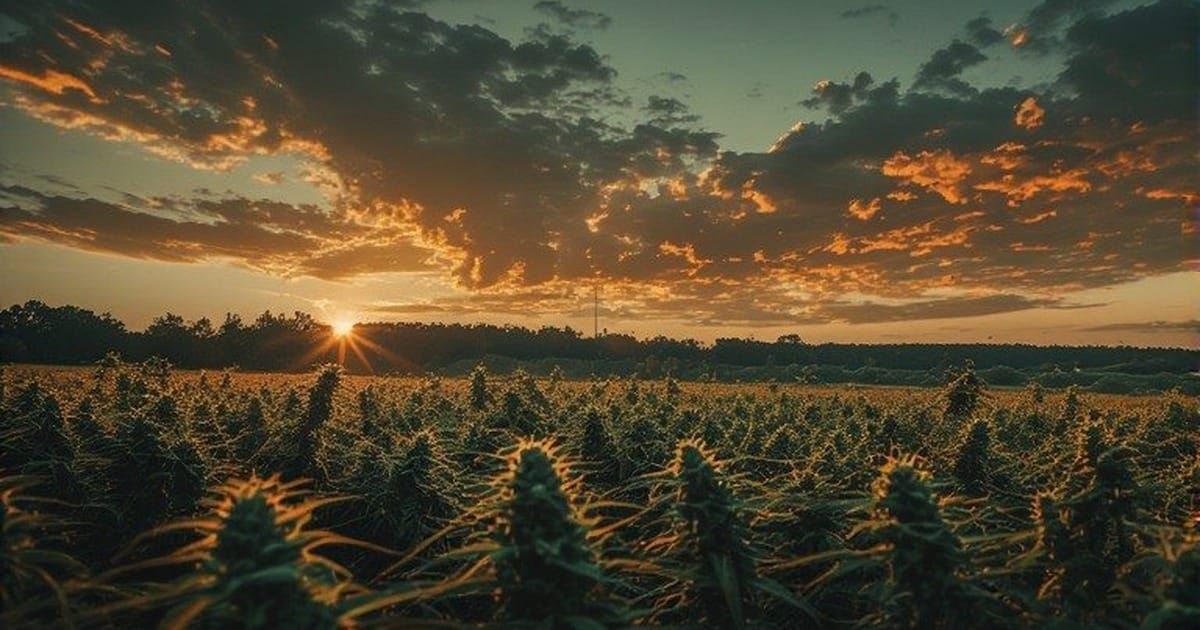
The 2018 Farm Bill created what critics call the hemp loophole — it defined hemp as cannabis containing less than 0.3% delta-9 THC by dry weight. That single measurement opened the door to a multibillion-dollar market in alternative cannabinoids. Delta-8 is psychoactive but technically not delta-9. THCA converts to delta-9 when heated — so raw flower stays below the threshold but gets you high when you smoke it. The market exploited every edge of that definition for eight years, and it grew into a $28 billion industry supporting an estimated 300,000 jobs.
The new provision changes the measurement from delta-9 THC only to total THC — including THCA, delta-8, and other variants. It also caps total THC per container at 0.4 milligrams, a threshold the industry describes as a de facto ban on nearly everything.
Last month, the House Agriculture Committee advanced the 2026 Farm Bill without a single provision to delay or soften the November deadline. An amendment to push it back two years was withdrawn before a vote. The FDA has already missed its 90-day deadline to clarify which specific cannabinoids will be covered, leaving manufacturers, retailers, and farmers with less than seven months to prepare for rules that haven't been finalized.
The industry's remaining hopes rest on two standalone bills. The Hemp Planting Predictability Act would delay the ban until November 2028. The Hemp Enforcement, Modernization and Protection Act would replace the ban entirely with a regulatory framework — age verification, potency limits of 5mg THC per serving, federal oversight. Neither bill has been scheduled for a hearing.
The parallel to early cannabis prohibition is difficult to miss. A legal industry built on a regulatory gap, serving millions of people, facing sudden recriminalization while politicians debate the details. The difference is that this time, the people losing their livelihoods built their businesses in good faith under federal law.
QUICK HITS
- Senators push opt-out. Senators Rand Paul, Amy Klobuchar, and Joni Ernst filed a bill allowing states and tribal nations to opt out of the November hemp ban independently. It has not yet received a hearing.
- California recalls synthetic cannabinoids. California regulators announced a recall of cannabis products containing THC-O and THCP — synthetic cannabinoids that have not been through safety review. A reminder that the regulatory line between natural and synthetic remains contested.
- Compass Pathways files rolling NDA. The psychedelics biotech confirmed it is preparing a rolling New Drug Application for its synthetic psilocybin compound COMP360, with full submission expected in Q4 2026. With Priority Review Vouchers now in play from the executive order, FDA approval could arrive within weeks of submission.
- Louisiana launches psychedelic therapy pilot. The Louisiana Senate passed a bill establishing a psychedelic-assisted therapy pilot program using opioid settlement dollars. Psilocybin and ibogaine are both in scope — another state moving faster than the federal government.
- THCA flower sales up 340%. Industry data shows THCA flower sales surged roughly 340% since early 2024, driven by consumers in states without legal recreational cannabis. Most of that market ceases to exist legally in November.
SCIENCE DESK
What total THC actually means — and why it matters
The shift from delta-9 THC to total THC is more technically significant than it sounds. THCA — tetrahydrocannabinolic acid — is the raw, non-psychoactive precursor to delta-9 THC found in the cannabis plant. It does not produce intoxication in its natural state. It only becomes psychoactive through decarboxylation — the process of applying heat. When you smoke, vape, or bake cannabis, THCA converts to delta-9 THC at roughly a 1:1 ratio.
This means a THCA flower product can test at 0.1% delta-9 THC in a lab — technically legal under the old definition — while containing 25% total THCA, which converts entirely to psychoactive delta-9 when consumed. The regulatory loophole was not an accident or an oversight. It was a direct consequence of how the law was written.
The new total THC standard closes that gap at the plant level. At the product level, the 0.4mg per container cap is the more consequential number. A standard hemp gummy might contain 10mg of delta-9 THC. The new cap is 0.4mg per container total. The math eliminates the product.
Whether this is a reasonable consumer safety measure or a blunt instrument that punishes a legal industry without evidence of harm is a question Congress has not yet meaningfully answered.
MARKET WATCH
The hemp sector is absorbing the uncertainty in predictable ways. Companies with exposure to delta-8, THCA, and alternative cannabinoid products are facing valuation pressure as the November deadline approaches without regulatory clarity. The FDA's missed deadline on cannabinoid classification adds another layer — businesses cannot compliance-plan for rules that don't exist yet.
The psychedelics sector is moving in the opposite direction. Following the executive order, Compass Pathways, Cybin, and AtaiBeckley saw meaningful single-session gains, with AtaiBeckley up roughly 25% in the days following the signing. The market is beginning to price in FDA approval of psilocybin as a near-term catalyst rather than a speculative long.
The divergence is striking. One plant medicine category is being fast-tracked through the most powerful regulatory agency in the world. Another is being recriminalized by a spending bill provision that most of the industry didn't see coming. Both outcomes were shaped more by political circumstance than by evidence of harm or efficacy. That is worth remembering when assessing what comes next for either sector.
THE LAST WORD
There is a particular cruelty in the way the hemp ban arrived. Not through a debate about public health, not through evidence of harm presented in committee, but tucked into a must-pass spending bill at the end of a long shutdown negotiation. The people who built businesses under the 2018 Farm Bill did exactly what a functioning regulatory system is supposed to encourage — they followed the law, built supply chains, hired workers, paid taxes.
Now the same government that invited them in is giving them seven months notice, with rules that still haven't been written.
The communities most invested in hemp-derived products — rural farmers who pivoted from tobacco, small retailers in states where cannabis remains illegal, low-income consumers who found affordable access to relief — will absorb the impact first and loudest. The large operators will adapt or lobby their way to carve-outs. They always do.
A regulatory framework that protects consumers while preserving legal access is not a radical idea. It is exactly what the Hemp Enforcement, Modernization and Protection Act proposes. Whether Congress moves fast enough to matter is a different question entirely.
— The Alkaloid
Sources
- DLA Piper — New federal restrictions on hemp and hemp-derived products: https://www.dlapiper.com/en-us/insights/publications/2025/11/new-federal-restrictions-on-hemp-and-hemp-derived-products
- Business of Cannabis — 2026 Farm Bill: No Relief for Hemp Industry: https://businessofcannabis.com/house-agriculture-committee-advances-farm-bill-with-no-relief-for-hemp-industry/
- MJ Biz Daily — No hemp THC ban delay in House Farm Bill: https://mjbizdaily.com/no-hemp-thc-ban-relief-in-house-farm-bill-but-farmers-beware/614817/
- Green Rush News — The $28 Billion Hemp Industry Has Until November: https://greenrushnews.com/articles/hemp-thc-ban-november-2026-farm-bill/
- Cannabis Business Times — Intoxicating Hemp Ban Unchanged in 2026 Farm Bill: https://www.cannabisbusinesstimes.com/hemp/news/15818903/intoxicating-hemp-ban-unchanged-in-2026-farm-bills-advancement
- McGowan Wholesale — Navigating the 2026 Intoxicating Hemp Ban: https://www.mcgowanwholesale.com/navigating-the-2026-intoxicating-hemp-ban/
- CNBC — Trump psychedelics executive order cannabis reform: https://www.cnbc.com/2026/04/20/trump-psychedelics-executive-order-cannabis-reform.html
- Congress.gov — Change to Federal Definition of Hemp: https://www.congress.gov/crs-product/IN12620
The Alkaloid publishes every Tuesday. Forward this to someone who needs the dose. Subscribe for full access: TheAlkaloid.com